
PUBLIC–PRIVATE PARTNERSHIPS: THEORY, PRACTICE AND EMERGING DIRECTIONS
Keywords:
Public-Private Partnerships, Infrastructure Finance, New Public Management, Sustainability, Green PPPs, Ethical Governance, Risk Allocation, Regional Development, Public Policy, Contract ManagementSynopsis
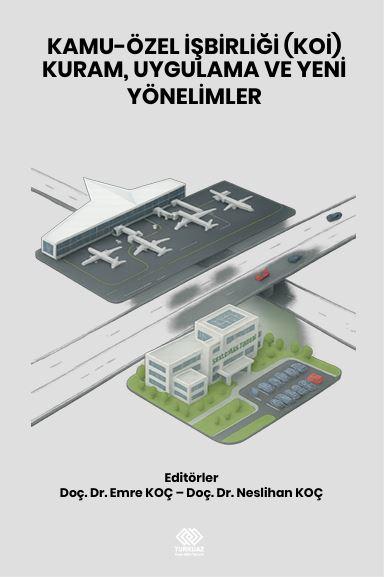
This edited volume examines Public-Private Partnerships (PPPs) from a comprehensive and multidimensional perspective, blending scientific rigour with a subtly literary tone to illuminate the evolving nature of public service delivery. Far beyond being a mere financing mechanism, PPPs have become instruments that reshape the mission of the state, redefine the boundaries between public and private actors, and influence the socio-economic fabric of societies. In an era marked by fiscal constraints, rapid urbanisation, and global uncertainty, PPPs provide governments with not only financial relief but also the possibility of designing more innovative, sustainable, and citizen-oriented services.
The book brings together a diverse set of studies that trace the historical evolution of PPPs, analyse their institutional and financial foundations, and investigate their impacts on governance, sustainability, regional development, and public ethics. Special emphasis is placed on the transition from traditional bureaucracy to New Public Management, which paved the way for performance-based governance, risk sharing, and long-term contractual arrangements. These transformations are examined within national and international contexts, allowing the reader to grasp both global trends and local adaptations.
A distinctive contribution of this volume is its focus on the broader social and ethical dimensions of PPPs. Issues such as transparency, accountability, conflict of interest, the protection of public interest, and the cultivation of public trust are discussed through a critical yet constructive lens. The chapters also explore how infrastructure projects influence spatial justice, regional inequalities, and socio-economic mobility—highlighting the dual nature of PPPs as both enablers of opportunity and potential sources of disparity.
The rise of green PPPs and sustainability-centered partnerships is another central theme. As climate challenges intensify and environmental awareness grows, PPPs are increasingly expected to incorporate ecological and social considerations from the very first stages of project design.
Overall, this book provides scholars, policymakers, and practitioners with a scientifically grounded yet elegantly written reference work that captures the essence, complexity, and future direction of Public-Private Partnerships.
Chapters
-
THE CONCEPT, DEVELOPMENT, AND APPLICATION EXAMPLES OF PUBLIC-PRIVATE PARTNERSHIP
-
PUBLIC–PRIVATE PARTNERSHIPS IN DEVELOPING COUNTRIES: CONCEPTS, CHALLENGES AND POLICY IMPLICATIONS
-
FINANCING OF PUBLIC-PRIVATE PARTNERSHIP (PPP) PROJECTS
-
ETHICS IN PUBLIC–PRIVATE PARTNERSHIPS
-
THE EFFECTS OF PUBLIC-PRIVATE PARTNERSHIP ON REGIONAL DEVELOPMENT AND INEQUALITY
-
THE SOCIAL DİMENSION OF PUBLIC–PRIVATE PARTNERSHIP (PPP) INFRASTRUCTURE SPENDING
-
EVOLUTION OF PUBLIC-PRIVATE PARTNERSHIPS AND NEW TRENDS
-
GREEN PPPs ON SUSTAINABLE DEVELOPMENT GOALS: A TREND ANALYSIS APPROACH
Downloads
Published
December 12, 2025
Copyright (c) 2025 Doç. Dr. Özgür Emre KOÇ (Cilt editörü); Dr. Arş. Gör. Tuğba BERÇİNTÜRK- Arş.Gör. Nurcan İGNECİ- Doç. Dr. Murat BELKE- Doç. Dr. Düriye TOPRAK- Prof. Dr. Burcu GEDİZ ORAL- Doç. Dr.. Mutlu YORULDU- Doç. Dr. Özgür Emre KOÇ- Doç. Dr. Neslihan KOÇ (Bölüm Yazarı); Doç. Dr. Neslihan KOÇ (Cilt editörü); Arş. Gör. Dr. Tuğba ARPAZLI FAZLILAR (Bölüm Yazarı)

Details about the available publication format: PDF
PDF
ISBN-13 (15)
978-625-5519-34-4