
ENVIRONMENTAL FISCAL POLICIES IN E-WASTE MANAGEMENT
Synopsis
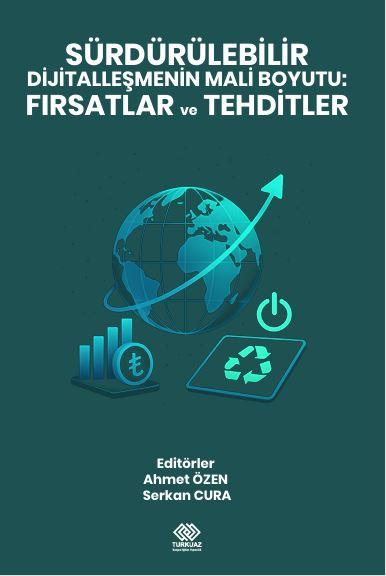
The study aims to evaluate the role of environmentally oriented fiscal policies in the management of electronic waste (e-waste). With the acceleration of technological advancements and digitalization, the lifespan of electronic products has significantly shortened, leading to a substantial increase in the amount of e-waste generated. E-waste possesses notable economic potential due to its content of valuable metals such as gold, copper, platinum, and cobalt; however, when improperly disposed of, it poses serious threats to ecosystems and human health through toxic elements such as lead, mercury, and cadmium. This situation illustrates the problem of market failure, arising from the inability of market mechanisms to internalize environmental costs within product prices, thereby demonstrating the necessity of supporting environmental policies through fiscal instruments. In this context, the study conceptually examines how green fiscal policy instruments—including environmental taxes, recycling subsidies, extended producer responsibility (EPR) schemes, deposit-refund systems, and green public expenditures—are utilized in e-waste management. Additionally, it evaluates the evolution of e-waste data across developed and developing economies over time. Based on the available data, it can be inferred that the implementation of environmentally sensitive fiscal instruments in developed countries has led to higher e-waste recycling rates, whereas in developing
countries, limited infrastructure and inadequate financial capacity have hindered the effective functioning of such systems. In conclusion, environmentally oriented fiscal policies function not
merely as financial instruments but as strategic public policy tools that facilitate the achievement of sustainable development, circular economy, and resource efficiency objectives. The effective implementation of these policy instruments contributes to the reduction ofenvironmentalexternalities, the dissemination of green technologies, and the alignment of public finance with the principles of environmental sustainability.
Downloads
Pages
114-133
Published
December 11, 2025
Categories
Copyright (c) 2025 Serkan CURA (Cilt editörü); Doç. Dr. Güngör ÖZCAN- Doç. Dr. Melissa Nihal ÇAĞLE- Dr. Öğr. Üyesi Kevser YILMAZ- Seyfi YILDIZ- Arş. Gör. Hafize Erva YILDIZ- Dr. Nur Sena OĞUZ- Prof. Dr. Gül KAYALIDERE- Arş. Gör. Gizem KALYONCU YIKILMAZ - Arş. Gör. Dr. Ceyda ÜNAL- Dr. Burcu USTA- Prof. Dr. Haluk EGELİ- Prof. Dr. Coşkun ÇILBANT - Dr. Selin SERT- Prof. Dr. Asuman ALTAY- Prof. Dr. Ahmet ÖZEN (Bölüm Yazarı); Prof. Dr. Ahmet ÖZEN (Cilt editörü); Hüsnü ÇETİN (Bölüm Yazarı)