
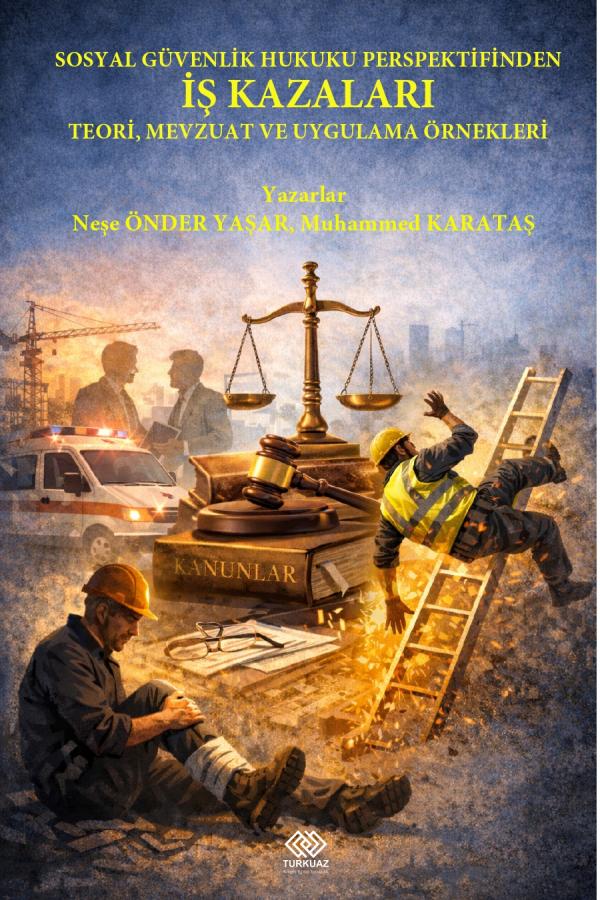
WORK ACCIDENTS FROM THE PERSPECTIVE OF SOCIAL SECURITY LAW: THEORY, LEGISLATION, AND APPLICATION EXAMPLES
Keywords:
Occupational Accidents, Social Security, Occupational Health and Safety, Social Insurance, Labor LawSynopsis
The radical changes in production processes that began with the Industrial Revolution introduced the phenomenon of "occupational accidents" into working life, and the management of this risk formed the basis of modern social security systems. This study provides a comprehensive analysis of the concept of occupational accidents from historical, theoretical, and practical perspectives, from the Social Security Institution (SGK) perspective.
The work begins by examining the historical development of occupational accident insurance from Bismarck to today's welfare states and its place in international norms (ILO, EU). The main focus of the study is the determination of occupational accidents, notification processes, and legal consequences within the context of Turkish Social Security Law. In the book, all bureaucratic and technical processes, from the submission of an occupational accident application to the SGK Provincial/Central Directorates until its conclusion, are detailed within the framework of relevant legislative provisions.
Adopting a unique approach to transferring theoretical knowledge into practice, this work concretizes complex legal processes by conducting case studies through specific occupational accident examples. This study, which examines the benefits provided to insured persons and beneficiaries under occupational accident insurance and employer obligations, serves as a fundamental reference for researchers, practitioners, and students in the fields of law, labor economics, and occupational health and safety.
Downloads
Published
December 26, 2025
Copyright (c) 2025 Dr. Neşe ÖNDER YAŞAR- Prof. Dr. Muhammed KARATAŞ (Yazar)

Details about this monograph
ISBN-13 (15)
978-625-5519-44-3